
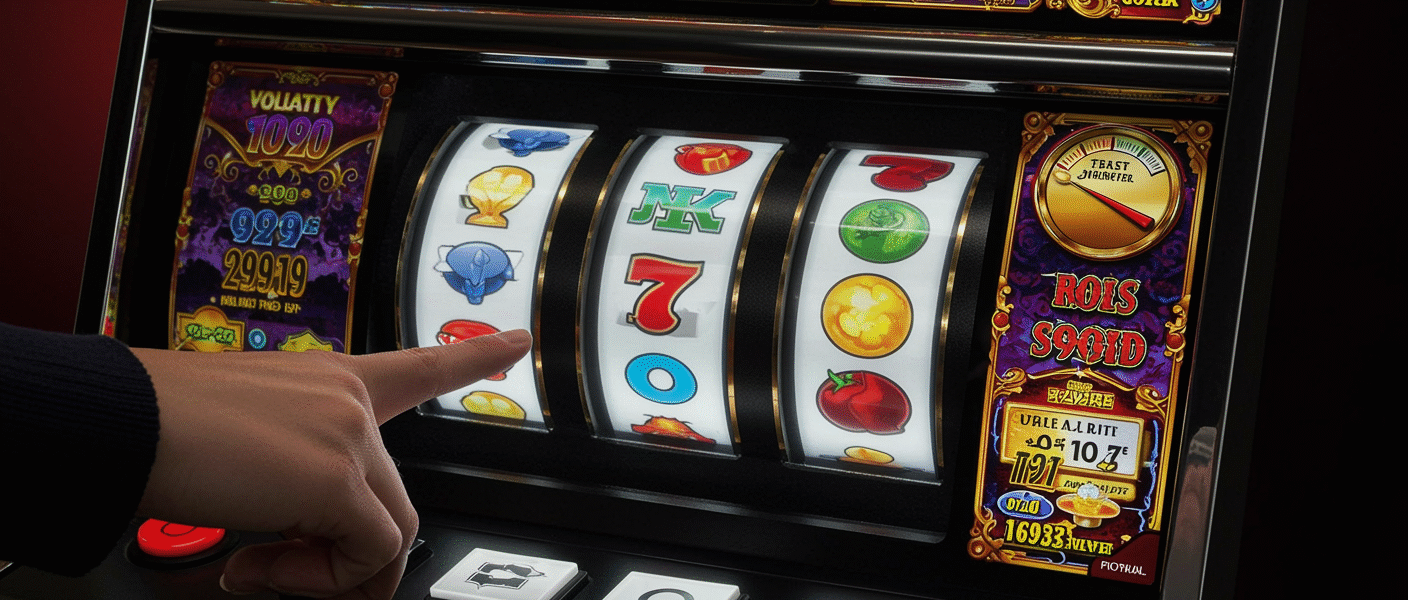
Slot machine volatility represents one of the most crucial yet misunderstood concepts in casino gaming. Simply put, volatility refers to the risk level and payout pattern of a slot game – determining how often you can expect to win and how large those wins might be. For South African players navigating both land-based casinos in Johannesburg, Cape Town, and Durban, as well as understanding the complex online gambling landscape, grasping volatility is essential for making informed gaming decisions.
Understanding volatility becomes particularly relevant for SA players given the country’s specific gambling regulations and the economic considerations that affect bankroll management. While high volatility slots might offer life-changing jackpots, they require substantial patience and larger bankrolls, making them unsuitable for casual players with limited budgets. Conversely, low volatility games provide steady entertainment but may not satisfy players seeking significant wins, highlighting why volatility knowledge directly impacts your gaming experience and financial outcomes.
What Is Slot Machine Volatility?
Slot machine volatility, also known as variance, defines the risk profile of a game and directly influences both the frequency and size of payouts you can expect. Think of volatility as the game’s personality – a high volatility slot like Mega Moolah behaves like a temperamental millionaire, rarely giving anything away but occasionally showering players with massive rewards. In contrast, low volatility games such as Starburst act like reliable friends, offering frequent small wins that keep your balance relatively stable during extended play sessions.
For South African players, understanding volatility means recognizing how different games align with local gaming preferences and economic realities. Many SA players prefer medium volatility slots found in Sun City or Montecasino because they balance excitement with sustainable gameplay, allowing for longer entertainment sessions without rapidly depleting bankrolls. The volatility level also determines optimal betting strategies – high volatility games typically require lower bet amounts to preserve funds for potential long winning droughts, while low volatility slots can accommodate higher per-spin wagers due to more consistent returns.
Provincial casino offerings across South Africa often feature different volatility distributions, with Gauteng casinos typically providing more high volatility progressive slots due to higher traffic volumes, while smaller provincial venues focus on medium to low volatility games that appeal to local recreational players. Understanding these patterns helps SA players choose appropriate venues and games based on their volatility preferences and bankroll constraints.
Volatility Versus RTP, Hit Rate, and Variance
| Concept | Definition | Influence on Gameplay |
|---|---|---|
| Volatility/Variance | Risk level and payout pattern frequency | Determines session length and bankroll swings |
| RTP (Return to Player) | Theoretical percentage returned over millions of spins | Affects long-term profitability but not short-term experience |
| Hit Rate | Percentage of spins that result in any win | Controls how often you see winning combinations |
These concepts work together to create the complete slot experience, and successful SA players learn to evaluate all three metrics rather than focusing on just one. A game with 96% RTP might seem attractive, but if it has high volatility and low hit rate, your R500 bankroll could disappear quickly despite the favorable long-term return percentage.
Why Volatility Matters for SA Players
South African gambling regulations require licensed casinos to maintain specific standards for game fairness, but volatility information isn’t always clearly displayed, making player education crucial. The National Gambling Act influences how casinos present slot information, yet many SA players remain unaware that two games with identical RTP percentages can provide vastly different experiences based on volatility levels.
Local economic factors also make volatility understanding essential – with the average South African household income requiring careful budgeting, choosing inappropriate volatility levels can quickly transform entertainment into financial stress. Smart SA players match volatility to their disposable income and entertainment goals, ensuring sustainable gaming experiences regardless of economic pressures.
Types of Slot Volatility: High, Medium, Low
| Volatility Level | Win Frequency | Payout Size | Player Profile | Example Games |
|---|---|---|---|---|
| Low Volatility | Very frequent (40-50% hit rate) | Small, consistent wins | Casual players, limited bankrolls | Starburst, Blood Suckers |
| Medium Volatility | Moderate (25-35% hit rate) | Balanced mix of small and large wins | Most SA recreational players | Book of Dead, Gonzo’s Quest |
| High Volatility | Rare (15-25% hit rate) | Large, potentially life-changing | Risk-tolerant, larger bankrolls | Mega Moolah, Dead or Alive 2 |
Low volatility slots dominate the casual gaming market in South African casinos because they provide extended entertainment value for modest budgets. These games typically feature frequent winning combinations that keep players engaged without creating dramatic bankroll swings. SA players often gravitate toward these options during weekday visits or when treating slot play as relaxation rather than potential profit.
Medium volatility represents the sweet spot for most South African players, offering enough excitement to maintain interest while providing reasonable winning opportunities. These games align perfectly with the social casino culture prevalent in SA venues, where players seek entertainment value alongside modest winning potential. The balanced nature of medium volatility slots makes them ideal for group gaming sessions common in South African casino culture.
High volatility slots attract serious players and those seeking significant wins, but require substantial patience and bankroll management skills. These games often feature progressive jackpots that can reach millions of rands, making them particularly appealing to SA players dreaming of financial transformation. However, the extended losing streaks common in high volatility games can quickly exhaust unprepared bankrolls, making them unsuitable for casual entertainment.
How to Recognize Volatility in a Slot
- Check the game’s information panel or help section for volatility ratings, which licensed SA casinos are increasingly required to display clearly alongside RTP percentages.
- Examine the paytable structure – high volatility games typically show dramatic differences between regular symbols and premium payouts, often with top prizes exceeding 1000x your bet.
- Look for bonus feature frequency and complexity – low volatility slots offer simple, frequent bonuses, while high volatility games feature elaborate bonus rounds that trigger rarely but provide substantial rewards.
- Test with small bets initially to observe payout patterns – spend 20-30 spins noting win frequency and sizes to gauge the game’s volatility personality.
- Research online reviews and player discussions specific to SA gaming forums, where local players share experiences with different volatility levels at various provincial casinos.
- Consult casino staff, particularly in smaller SA venues where employees often have extensive knowledge about individual game characteristics and can provide volatility guidance.
Volatility and RTP (Return to Player): Key Differences
While RTP and volatility both influence slot performance, they operate on completely different timescales and affect distinct aspects of your gaming experience. RTP represents the theoretical return percentage calculated over millions of spins, making it virtually irrelevant for typical SA players who might spin a few hundred times per session. Volatility, however, directly impacts every gaming session by determining the pattern and frequency of wins you’ll actually experience.
Understanding this distinction proves crucial for South African players because many casino marketing materials emphasize high RTP percentages while downplaying volatility information. A slot advertising 97% RTP might seem superior to one with 95% RTP, but if the higher RTP game has extreme volatility, your R300 entertainment budget could disappear in minutes despite the theoretically better return rate. Smart SA players learn to evaluate both metrics together, seeking combinations that match their bankroll size and entertainment goals.
The practical implications become clear when considering session management – high RTP with high volatility requires patience and substantial bankrolls to weather losing streaks until the theoretical return manifests. For most recreational SA players, moderate RTP combined with low-to-medium volatility provides superior entertainment value and more predictable outcomes, aligning better with typical casino visit budgets and time constraints.
Why RTP Alone Can Be Misleading
- RTP calculations assume millions of spins, but typical SA players complete only hundreds of spins per session, making short-term volatility more relevant than long-term return percentages.
- High RTP games often compensate with extreme volatility, meaning the advertised return rate only materializes after extended play that exceeds most players’ bankroll capacity.
- Marketing focus on RTP percentages can mask poor volatility matches – a 96% RTP high volatility slot might provide worse entertainment value than a 94% RTP medium volatility game for casual players.
- RTP doesn’t account for bonus feature accessibility – games might achieve high RTP through rare but massive bonus payouts that most players never experience during typical sessions.
Examples: High RTP, Different Volatility Levels
| Game | RTP% | Volatility | Player Experience |
|---|---|---|---|
| Blood Suckers | 98% | Low | Steady, predictable sessions with frequent small wins |
| Dead or Alive 2 | 96.8% | Extreme High | Long losing streaks punctuated by massive wins |
| Jammin’ Jars | 96.8% | High | Moderate losing streaks with significant win potential |
Choosing a Slot: Matching Volatility to Your Play Style
- Assess your bankroll realistically – if you’re playing with R200-500, focus on low-to-medium volatility slots that provide extended entertainment without rapid depletion risks.
- Define your primary goal – casual entertainment favors low volatility, while life-changing win potential requires high volatility games and corresponding bankroll management strategies.
- Consider your emotional tolerance for losing streaks – high volatility games can go 50+ spins without wins, which frustrates players expecting frequent action and validation.
- Match volatility to session length expectations – if you want 2-3 hours of play, choose low volatility; for quick high-intensity sessions, medium-to-high volatility works better.
- Factor in social aspects common in SA casino culture – low volatility slots work better for group play and conversation, while high volatility demands focused attention.
- Align with local casino offerings – smaller provincial venues typically feature more low-medium volatility options, while major Gauteng casinos provide full volatility ranges.
- Consider timing and crowd factors – high volatility progressive slots perform better during peak hours when jackpots accumulate faster from increased player volume.
Popular Volatility Choices Among SA Players
| Player Type | Typical Volatility | Recommended Games |
|---|---|---|
| Weekend Social Players | Low-Medium | Starburst, Gonzo’s Quest, Twin Spin |
| Regular Casino Visitors | Medium | Book of Dead, Sweet Bonanza, Big Bass Bonanza |
| High-Stakes Enthusiasts | High-Extreme | Mega Moolah, Hall of Gods, Divine Fortune |
Bankroll Management and Volatility
| Volatility Level | Session Length | Bankroll Recommendation | Example Outcomes |
|---|---|---|---|
| Low Volatility | 2-4 hours | 100-150x bet size | R200 allows R1-2 spins for extended play |
| Medium Volatility | 1-2 hours | 200-300x bet size | R500 supports R2-3 spins with balance swings |
| High Volatility | 30 mins – 2 hours | 400-500x bet size | R1000+ needed for R2-5 spins, expect volatility |
Effective bankroll management requires matching your available funds to appropriate volatility levels while maintaining strict discipline about loss limits. South African players must consider that high volatility games can consume entire session bankrolls without producing significant wins, making it crucial to never gamble money needed for essential expenses. The table above provides conservative guidelines, but individual risk tolerance and entertainment goals should ultimately determine specific bankroll allocation.
Smart SA players also implement time-based limits alongside monetary ones, recognizing that volatility affects decision-making ability during extended sessions. High volatility games can create emotional responses that lead to poor bankroll management, particularly during losing streaks when the temptation to chase losses becomes overwhelming. Setting both win and loss limits before beginning play helps maintain rational decision-making regardless of volatility-induced emotional swings.
Provincial economic factors also influence optimal bankroll management – players in higher cost-of-living areas like Cape Town and Johannesburg might need more conservative approaches compared to those in areas where casino entertainment represents a smaller percentage of discretionary spending. Successful long-term players adapt their volatility choices and bankroll strategies to align with their local economic realities and personal financial situations.
Tips for Responsible Play
- Never play high volatility slots with money you cannot afford to lose completely, as these games can produce extended losing streaks that exhaust entire bankrolls without warning.
- Utilize the responsible gambling tools required by South African casino regulations, including loss limits, time limits, and self-exclusion options available at all licensed venues.
- Consider volatility when setting win goals – low volatility games rarely produce massive wins, so set modest, achievable targets that align with the game’s natural payout patterns.
- Take regular breaks during high volatility sessions to maintain rational decision-making, as these games can create intense emotional responses that compromise judgment and bankroll management.
- Keep detailed records of your play across different volatility levels to identify which types provide the best entertainment value and outcomes for your specific playing style and budget.
South African Legal Casino Landscape & Volatility
South Africa’s gambling regulatory framework, overseen by the National Gambling Board and implemented through provincial licensing authorities, creates a complex environment for slot machine offerings and volatility transparency. Licensed casinos must meet strict standards for game fairness and randomness, but volatility disclosure requirements vary significantly between provinces, leading to inconsistent information availability for players. This regulatory patchwork means SA players often encounter different levels of volatility transparency depending on their chosen casino’s provincial jurisdiction.
The legal distinction between land-based and online gambling further complicates volatility considerations for South African players. While licensed land-based casinos operate under established provincial regulations with standardized slot offerings, the online gambling landscape remains largely unregulated, exposing players to international operators with varying volatility disclosure standards. This regulatory gap creates particular challenges for SA players seeking consistent volatility information across different gambling platforms and venues.
Recent legislative discussions around online gambling regulation suggest future improvements in volatility transparency and player protection measures. However, current SA players must navigate this complex legal landscape by focusing on licensed venues that provide adequate game information and implementing personal strategies for evaluating volatility when official disclosures prove insufficient or inconsistent across different gaming platforms.
Provincial Differences in Licensed Slot Offerings
| Province | Casino Count | Slot Volatility Info Transparency |
|---|---|---|
| Gauteng | 12 | High – Most venues display volatility ratings |
| Western Cape | 8 | Medium – Inconsistent volatility disclosure |
| KwaZulu-Natal | 6 | Medium – Limited volatility information available |
| Eastern Cape | 4 | Low – Minimal volatility disclosure |
What’s Legal for Online and Land-based Slots?
- Licensed land-based casinos operate legally under provincial jurisdiction with regulated slot offerings that meet specific standards for fairness, randomness, and player protection measures.
- Online gambling remains largely unregulated in South Africa, with most international operators serving SA players without local licensing, creating potential issues for dispute resolution and player protection.
- Sports betting represents the only clearly legal form of online gambling for SA residents, operated through licensed provincial operators with established regulatory oversight and consumer protection frameworks.
- Interactive gambling and online slots fall into legal gray areas where enforcement remains limited, but players lack the regulatory protections available in licensed land-based venues.
- Future legislation may clarify online slot legality and establish uniform volatility disclosure standards across all gambling platforms serving South African players.
Advanced Strategies: Exploiting Bonus Features and Volatility
Understanding the relationship between volatility and bonus features enables sophisticated players to maximize their gaming effectiveness and entertainment value. Low volatility slots typically offer frequent but modest bonus rounds that provide steady bankroll support and extended play, while high volatility games feature rare but potentially massive bonus events that can transform entire sessions. Smart SA players learn to recognize these patterns and adjust their betting strategies accordingly, increasing wagers during favorable bonus cycles and reducing them during base game play.
Volatility also influences optimal bonus feature strategies – free spin rounds in high volatility slots often represent the primary winning opportunities, making it crucial to preserve bankroll specifically for bonus round activation. Medium volatility games provide more balanced bonus-to-base-game ratios, allowing players to maintain consistent betting strategies without dramatic adjustments. These insights prove particularly valuable in South African casino environments where bonus feature frequency and volatility aren’t always clearly disclosed.
Progressive jackpot strategies require special volatility considerations, as these features typically increase overall game volatility regardless of base game characteristics. SA players pursuing progressive wins must account for this additional volatility layer when planning bankroll management and session strategies. Understanding how different volatility levels interact with progressive mechanics helps players make informed decisions about when and how to pursue these life-changing opportunities.
Seasonal and promotional considerations also affect advanced volatility strategies – many SA casinos offer enhanced bonus features during peak periods or special events, temporarily altering effective game volatility. Experienced players track these patterns and adjust their playing schedules and game selections to capitalize on favorable volatility-bonus feature combinations during promotional periods.
Best Practices for Hunting Jackpots vs. Steady Play
- For jackpot hunting, focus exclusively on high volatility progressive slots during peak casino hours when jackpot accumulation rates maximize due to increased player volume and contribution rates.
- Implement strict loss limits when pursuing jackpots – never chase progressive wins beyond predetermined bankroll limits, as high volatility can quickly exhaust funds without producing desired results.
- For steady play entertainment, choose low-to-medium volatility slots with frequent bonus features that provide consistent engagement and modest winning opportunities throughout extended sessions.
- Alternate between volatility levels based on bankroll status – begin sessions with medium volatility for balance assessment, then adjust to higher or lower volatility based on early results and remaining budget.
- Track bonus feature frequencies across different volatility levels to identify games that provide optimal entertainment value and winning potential for your specific playing style and bankroll constraints.
South African-Focused Example Scenarios
Consider a typical Saturday evening at Montecasino, where a recreational player arrives with R500 entertainment budget and 3-4 hours available. Choosing medium volatility slots like Book of Dead allows for R2-3 spins over extended periods, with bonus features occurring frequently enough to maintain interest while providing opportunities for modest wins that extend playing time. This approach aligns perfectly with the social atmosphere and entertainment expectations common among SA weekend casino visitors.
Contrast this with a dedicated player at Sun City pursuing progressive jackpots with R2000 bankroll and specific winning goals. High volatility progressive slots require R5-10 maximum bets for jackpot qualification, limiting session length but providing access to life-changing win potential. This strategy demands emotional discipline and strict loss limits, as extended losing streaks commonly occur before bonus features activate and jackpot opportunities arise.
Common Myths and Mistakes About Slot Volatility
- Myth: High volatility games are “due” for wins after losing streaks – Reality: Each spin remains independent, and volatility only describes long-term patterns, not predictable win timing or guaranteed outcomes after losses.
- Mistake: Choosing volatility based solely on jackpot size – Reality: Massive jackpots often indicate extreme volatility that requires substantial bankrolls and patience most recreational players cannot sustain effectively.
- Myth: Low volatility games provide guaranteed profits with sufficient play time – Reality: All slots maintain house edges regardless of volatility, and low volatility simply reduces short-term variance without eliminating long-term mathematical disadvantage.
- Mistake: Increasing bets during losing streaks to trigger wins faster – Reality: Volatility patterns operate independently of bet size changes, and increasing wagers during losses typically accelerates bankroll depletion without improving win probability.
- Myth: Medium volatility always provides the best balance for all players – Reality: Optimal volatility depends on individual bankroll size, session goals, risk tolerance, and entertainment preferences rather than universal “balanced” characteristics.
- Mistake: Ignoring RTP when focusing on volatility matching – Reality: Both metrics work together to determine game suitability, and extremely low RTP can negate favorable volatility characteristics over extended play periods.
How to Avoid Volatility Pitfalls in Practice
Successful volatility navigation requires combining theoretical knowledge with practical experience and strict adherence to predetermined limits regardless of short-term outcomes. Start by testing different volatility levels with minimal stakes to understand how each type affects your emotional responses and bankroll patterns before committing to larger betting strategies. This empirical approach helps SA players develop realistic expectations and identify personal volatility preferences without risking significant funds during the learning process.
Maintain detailed playing records that track volatility types, session outcomes, and emotional responses to build comprehensive understanding of which games provide optimal entertainment value for your specific circumstances. Many SA players discover that their theoretical volatility preferences differ significantly from their practical comfort levels, making this experiential learning crucial for long-term gaming success and enjoyment.